| Features | Index |
| Hardness | 3-4 |
| Heat Resistance | Moderate |
| Acid Resistance | Low |
| Maintenance | High (Requires sealing) |
| Common Uses | Countertops, floors and sculptures |
| Reference standard 15.845/2015 |
Chandon processing techniques
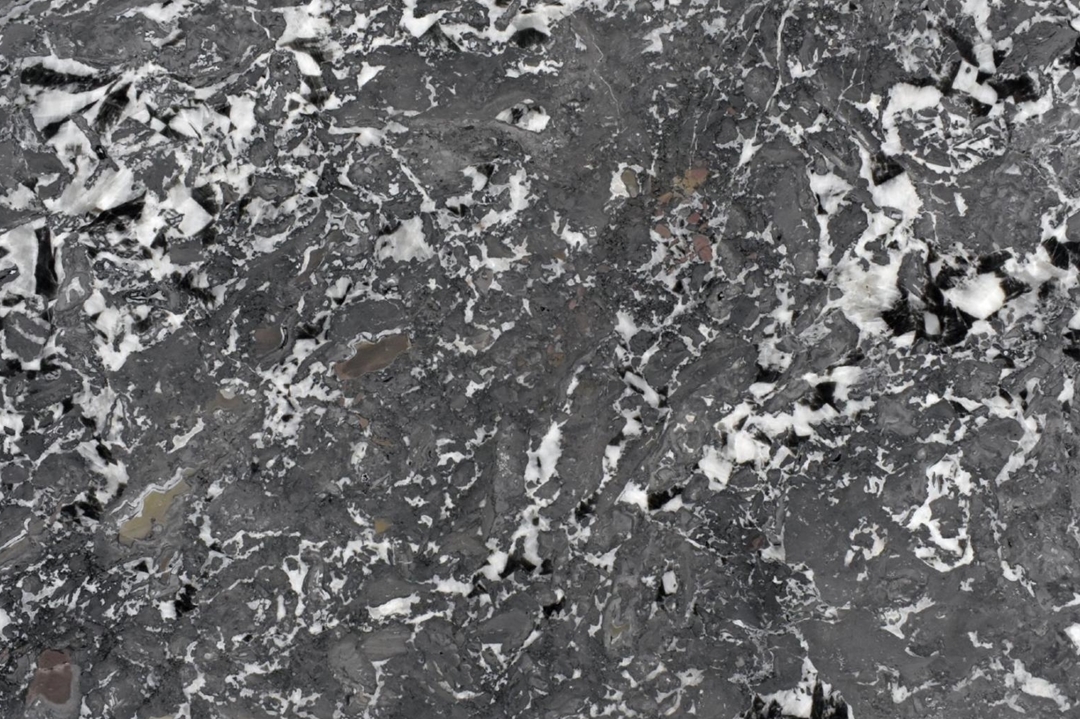
The Chandon is a rock mined in Paraná, near Curitiba, Brazil. It is a carbonate metamorphic rock composed of 95% dolomite, 5% quartz, and traces of talc, muscovite, chlorite, and magnesite, with fine-grained crystals. Its intense metamorphism resulted in significant compaction and, consequently, low porosity. Carbonate rocks are characterized by low porosity, a hardness of between 3 and 3.5 on the Mohs scale, and low resistance to chemical attack by acids such as citric acid. Aesthetically, they blend well with any environment, including bathrooms, countertops, interior stairs, niches, and more. For installation in high-use areas, we recommend installing the product with a brushed finish to avoid loss of shine.
INFORMATION TO THE MANUFACTURER (marbler)
Note: Although this material has metamorphic rock characteristics, it cannot be compared to quartzite in the specifications due to its lower hardness. However, when preparing the cut, we must use the same tools as for cutting quartzite. This material has small veins in the slab that can open when subjected to force during the cutting process in the marble shop.
Processing Data
The correct selection of inputs for manufacturing this product directly impacts production costs and the final quality of the finished part. Assuming the equipment used is in good condition, the cooling system water is clean, and there is no solid waste circulating through it, the following are recommendations for the inputs required for successful processing:
Cutting Method: to ensure the quality of cuts and grinding, we recommend diamond discs, saws, cups and grinding wheels made of soft metal alloy. In Brazil, we recommend tools from Pyramid model PR30 (same used in Dekton), Performance Model PS 32 – 350mm,
Waterproofing After gluing and finishing the pieces, we recommend applying a water-repellent film to protect the surface from stains such as juices, oils, ketchup, and others. We perform waterproofing as follows: With the surface clean and dry, and using a brush, apply a layer of waterproofing to all surfaces (tops, skirts, wheels, countertops, sills, and windowsills).
It is important to follow the manufacturer's usage recommendations before starting the gluing and/or finishing process.
Recommended Products:
In Brazil = Rock Shield Nano – Chemistone, Nano Effect – AKEMI, Idea Gold – Bellinzonni.
International: Idea Gold – Bellinzoni, Stain Proof – Alicante, Proseal – Tenax.
Adhesive bonding: to ensure the best adhesion quality, we recommend the following adhesives:
Brazil and abroad: Platinum – AKEMI, Titanium – Tenax, Spezial tak – BellinzonniI
NOTE: It is important to strictly follow the proportion of glue + catalyst recommended by the manufacturers. In this case, we recommend using a pigment to match the color pattern of the material.
IMPORTANT INFORMATION FOR INSTALLERS
Installation of vertical panels: For installing vertical panels, bench tops, and skirting boards, we recommend using PU 40 polyurethane adhesive. Remember that the wall surface must be level and free of dust and other dirt. After applying PU 40 and gluing the pieces, we recommend waiting the manufacturer's suggested curing time before releasing the area for use.
Product recommendation: Hybrid adhesive AK 100 – AKEMI / TK PU40 gray or black – AKEMI / PU 40 multi gray – Barone / PU 40 – Tekbond
Installation on sink countertops: Given this material's low flexural strength, we recommend using support points every 60 cm on countertops. For cantilevered countertops, we recommend supporting the piece on a metal support and securing it with black or gray PU 40 polyurethane glue.
Post-installation cleaning and protection: All post-construction cleaning must be carried out using water and neutral detergent to remove residues. Acidic detergents are not permitted, as they damage the waterproofing layer applied to the pieces.
Recommendation: Quartzolit post-construction cleaner / Post-construction floor cleaner detergent, by Bellinzonni / PCS Alcalino, by the manufacturer Piso Clean / or Basic Cleaner detergent – AKEMI brand
IMPORTANT INFORMATION TO THE END USER (Attention family and domestic workers).
Long-term care:
- Reapply waterproofing every 12 months. These products are volatile and gradually evaporate over time, so periodic reapplication is necessary.
Recommended products: Rock Protect (Chemistone) / Idea Gold (Bellinzoni) / Nano Effect (AKEMI)
How to apply: Wash the surface thoroughly with water and neutral detergent, then dry with a towel. Spray 70% alcohol over the area and let it evaporate for 30 minutes. Finish drying with a hairdryer. Once the surface is clean and dry, spray the waterproofing product (using a regular spray bottle) evenly over the surface and spread it with a white cloth (to prevent color transfer). Let the product penetrate the stone pores for 12 hours. After that, your countertop or table is ready for use. These products are non-toxic.
This procedure ensures protection for your product and safety for your family.
- Surface protection guidelines:
- Do not use abrasive cleaners, as they can scratch the surface. Use a cloth or sponge with neutral soap.
- Do not cut directly on the surface, always use cutting boards.
- Do not place hot objects, such as pans, directly on the countertop. Natural stones are treated with resin, a polymer that can change color when exposed to intense heat, causing stains. Use wooden, rubber, plastic, or fabric trivets.
- Do not drag utensils across the surface. Small imperfections can cause scratches.
- Although the stone is dense, low-porosity, and protected by resin and waterproofing, it can absorb small amounts of liquids if left for long periods. Acidic and alkaline substances such as vinegar, lemon, coffee, wine, ketchup, mustard, mayonnaise, soft drinks, beetroot, and oils can cause stains if not removed promptly.
- Avoid impacts, excessive weight, or shocks on your stone. Despite its apparent robustness, natural stone has low cohesion between minerals and may develop cracks or fissures under physical stress or vibration. Do not use pestles directly on the surface unless protected by an impact absorber.
WITH THE RIGHT CARE, YOUR NATURAL STONE WILL LAST FOR GENERATIONS, PRESERVING THE SAME BEAUTY AND ELEGANCE AS THE DAY IT WAS INSTALLED.


